
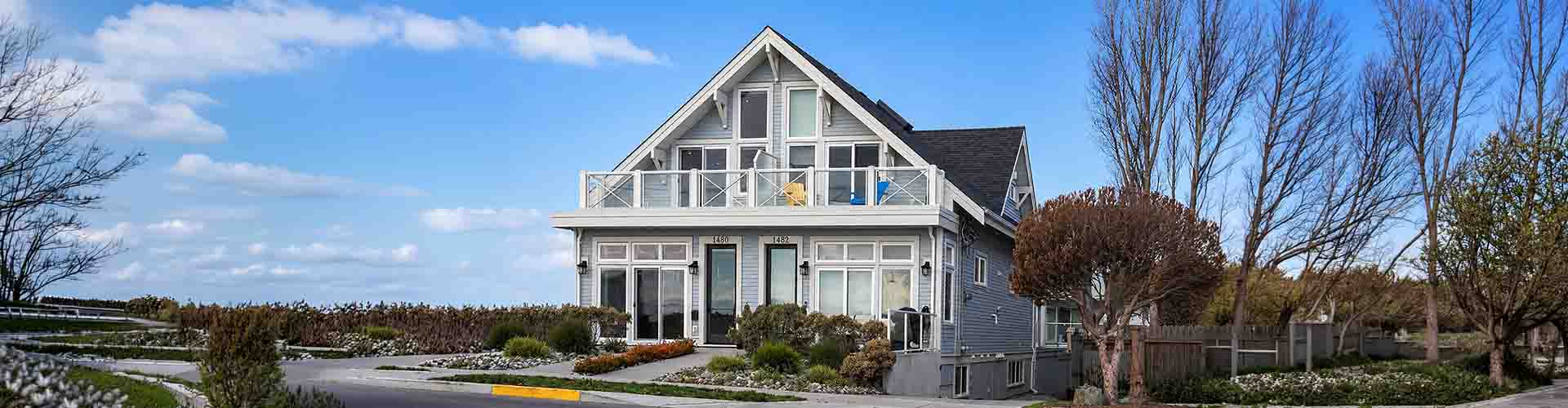
A half duplex can be an appealing option in Victoria. It often offers more privacy, outdoor space, and a more house-like feel than a condo or townhouse, while usually remaining more affordable than a detached single-family home. What surprises some buyers is that a half duplex in British Columbia is commonly structured as a strata property, meaning the owners are part of a strata corporation governed by the Strata Property Act. So while a duplex may operate more casually than a larger condo building, there are still bylaws, insurance obligations, repair responsibilities, voting rules, and potential legal consequences if the owners are not on the same page.
How Is a half duplex different from a single-family home?
The biggest practical difference is that, with a half duplex, you are not dealing solely with your own property. For example, in a detached single-family home, the owner is fully responsible for the house and lot. Even in an informal duplex strata with no monthly strata fee, some responsibilities fall to the strata corporation, depending on the strata plan. Under the Strata Property Act, the strata corporation is responsible for managing and maintaining common property and common assets, and the standard bylaws assign it specific repair and maintenance obligations as well. Common property and common assets are defined terms in the Strata Property Act.
This legal structure does not make duplex ownership a bad idea. Many half duplexes are excellent homes. It simply means buyers should fully understand what they’re buying before they commit.
Must duplex strata property operate like condos?
Not usually in practice — but legally, the framework described above still matters.
Many two-owner duplex stratas in Victoria operate quite informally. Some do not collect regular monthly strata fees and instead deal with expenses as they arise, although the Act contemplates an operating fund, a contingency reserve fund, annual budgeting, and owner contributions through strata fees.. They instead deal with expenses as they arise, waive formal meetings, and simply agree on matters between themselves.
That kind of informal operation is common. But it is important to understand that informal practice does not replace or allow the owners to “opt out” of the statute. The Strata Property Act still governs the strata corporation. In residential stratas, voting at general meetings is by majority unless the Act requires a higher threshold, and there are also statutory rules around budgets, common expenses, and meetings. In practice this usual means the consent of both owners is required for decision making, such as to paint the exterior of the building. So the real question for a buyer is whether the two owners handle things sensibly and cooperatively.
Are Depreciation Reports required for a half duplex strata?
No. In British Columbia, strata corporations with fewer than five strata lots are exempt from the current depreciation report requirement. For strata corporations with five or more lots, depreciation reports are now required on a five-year cycle. 
That exemption makes sense for many duplexes, but it also means buyers should pay closer attention to the repair history, condition of the building, and how the owners have dealt with larger expenses over time. This also makes an independent physical inspection of the property at the time of purchase all the more important.
Who has to repair and maintain what?
This is one of the most important questions in any half duplex purchase.
The Strata Property Act says the strata corporation is responsible for repairing and maintaining common property and common assets. It can also, by bylaw, make an owner responsible for limited common property — meaning common property set aside for the exclusive use of one owner or one strata lot, such as a yard, driveway, or parking area. But for now, a strata cannot shift responsibility by bylaw for ordinary common property.
Under the standard bylaws, an owner is responsible for repairing and maintaining their own strata lot, except for certain items that remain the strata corporation’s responsibility. The strata corporation remains responsible for the structure of the building, the exterior, chimneys, stairs, balconies and other features attached to the outside of the building, exterior doors and windows, and fences or railings enclosing patios, balconies, and yards. That is why duplex owners often share the cost of major exterior work such as roofing, siding, windows, or foundation-related repairs. In many cases, that is not just a neighbourly arrangement; it reflects the strata corporation’s legal repair obligations.
What about insurance?
Insurance is another area where the legal structure matters. The duty to obtain the building insurance required by the Act rests on the strata corporation, not on the owners acting in their personal capacities. Owners should still carry their own policies for contents, liability, improvements, deductibles, and any gaps in coverage. In a duplex strata, the owners must arrange the building insurance cooperatively and in the name of the strata corporation. This is one of the first things we like to verify for buyers looking at a half duplex: not just whether insurance exists, but whether it is set up properly and whether the owners understand their respective responsibilities.
Are pets, alterations, and renovations still controlled?
Often, yes. Many half duplexes continue to use the default Standard Bylaws under the Strata Property Act because no updated bylaws were ever filed. That can matter more than buyers expect. For example, under the standard bylaws, an owner must obtain written approval before making certain alterations affecting the structure, exterior, chimneys, stairs, balconies, exterior doors or windows, or fences and railings. The default pet bylaw is also more restrictive than many buyers assume, allowing for only one dog or one cat. 
In real life, neighbours in a two-lot strata may be relaxed about these issues. But if relations change, an informal understanding is not always much comfort. It is better to know in advance what the bylaws say and how strictly they have been followed.
The risk in a duplex strata: two-owner deadlock
The Strata Property Act does not require every strata decision to be unanimous. Strata resolutions are decided by majority vote unless the Act or regulations require a 3/4 vote, 80% vote, or unanimous vote. 
In a two-owner strata, many day-to-day decisions effectively require both owners to agree, because if the owners split 1–1, the motion fails. The practical reality is that a breakdown in cooperation can create problems. If the owners disagree about repairs, insurance, pets, alterations, budgeting, or how closely to follow the bylaws, there is no larger ownership group to break the impasse. Even where one owner may technically have a path forward under the legislation, the relationship can deteriorate quickly and routine matters can become expensive disputes.
This does not mean duplex stratas are inherently problematic. Many work very well. But they work best where the owners are practical, communicative, and reasonably aligned on maintenance standards and cost-sharing.
So, Is buying a half duplex a good idea?
Often, yes.
A half duplex can be an excellent alternative to a detached house, especially in Victoria where price, location, and liveability all matter. But it is important not to treat it as “basically a house” without understanding the strata overlay.
Before buying, it is critical to review:
- the Strata Property Act
- The registered bylaws (or Standard Bylaws if none are registered)
- the insurance policy
- the repair history and cost-sharing practices
- how much money is in the Contingency Reserve Fund, if there is one
- whether the strata has been operating cooperatively and sensibly
Those details can make a big difference to your experience as an owner.
Thinking about buying a half duplex in Victoria?
If you are considering a half duplex, we will help you look beyond the listing and assess how that particular strata is actually functioning in practice. That includes reviewing the bylaws, insurance, repair responsibilities, and the overall risk of the ownership structure so you have a clearer picture of what you are buying before you write an offer.
Reach out to us if you are looking at a duplex property in Victoria and want a practical, informed read on the strata issues that may not be obvious from the listing.